


Abstract
This lesson will address the importance of language. We’ll learn that language is very powerful and that, therefore, it is important to use it carefully and with good intentions. Good use of words can help others, while negative use of words can cause harm.
- The students will study Jewish sources to learn about the importance of optimal communication, to express themselves and to understand others, and will be introduced to the concept of lashon hara.
- The students will develop sensitivity and awareness of the importance of good, healthy discourse and the importance of avoiding and rejecting negative, hurtful discourse.
Opening Hook
- Play charades: act out words/phrases without speaking
- Other students guess the word or phrase
- Competition between two teams
- Discuss: How did participants feel? What was difficult?
- Explain the context of Hebrew Language Day (21st Tevet, birthday of Eliezer Ben-Yehuda)
Part 1: The Power of Speech
- Discuss: In what ways does speech distinguish humans from all other animals?
- Display the verse from Proverbs 18:21: “Death and life are in the power of the tongue”
- Ask for examples of positive and negative experiences with speech
- Work in pairs on the midrash of the slave Tavi (Supplement 1)
- Discuss the message: “When it’s good, there’s nothing better and when it’s bad, there’s nothing worse”
- Level 3: Discussion on social media and online comments
Part 2: Practicing Good Words
- Project the verse from Psalms 34:13-14: “Keep your tongue from evil”
- Listen to the song “Mi Ha-Ish”
- Distribute papers with the name of a classmate
- Each student writes a nice message for that classmate
- Everyone gets up and delivers their message to the person
- Discuss the experience in class
- Level 1: Use papers with a heart drawing (Supplement 2)
Conclusion
- Words are a basic and important way we communicate
- We can always find an opportunity to add a good word in our daily lives
- Sometimes, a few positive words can make a big difference
The document does not provide an explicit list of equipment, but we can identify:
- Board or projector (to display verses)
- Printed supplements:
- Supplement 1: Midrash “Good Language and Bad Language”
- Supplement 2: Papers with a drawing of a heart (Level 1)
- Materials for charades (list of words/phrases to act out)
- Papers/notes (for writing nice messages)
- Access to the song “Mi Ha-Ish” (audio)
- Access to digital memory game (QR code provided in document)
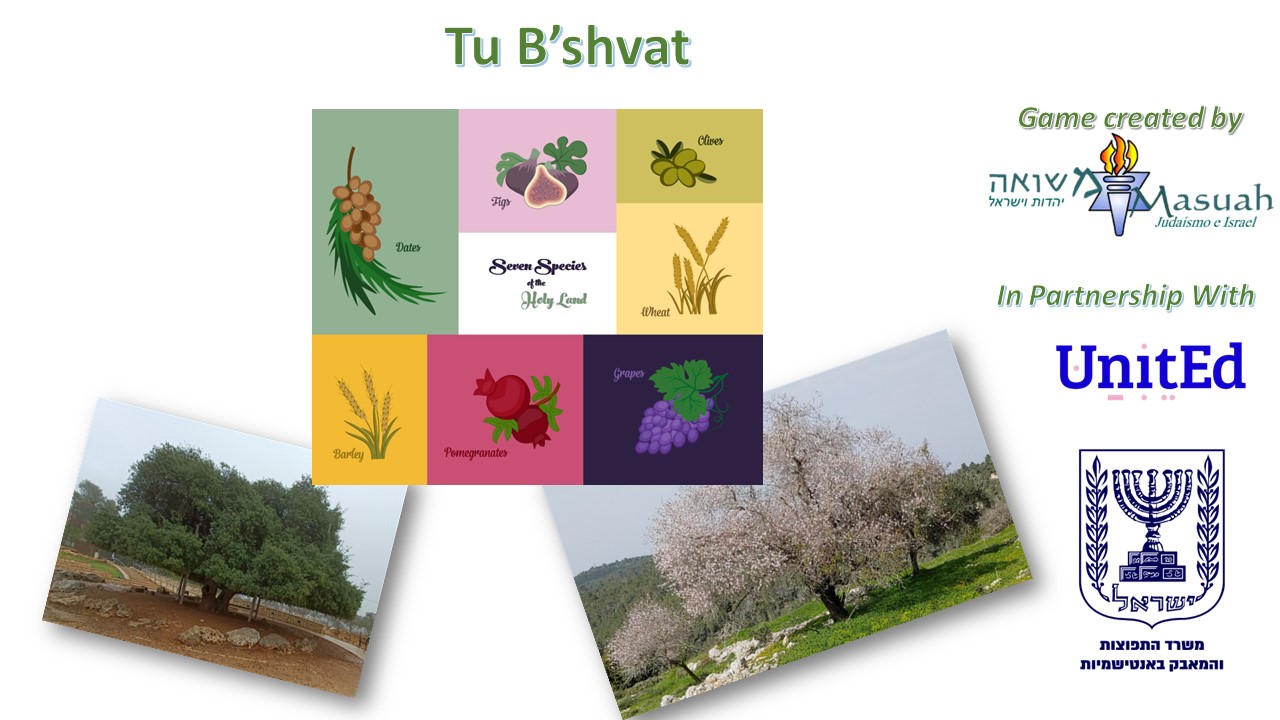
An Interactive Game: Good Words – A memory game
A memory game that uses pictures and symbols to teach the students positive things to say in Hebrew
Instructions for the game:
- Divide the class into two teams
- Each turn, have the students try to find two matching cards
- Find Card A, which shows a word in Hebrew and a picture, and then find the matching Card B, which shows the English translation of that word
- The team that finds the greatest number of matching pairs wins
The game has two levels: Level 1 – easy; Level 2 – difficult.
A QR code is provided in the document to access the game.